
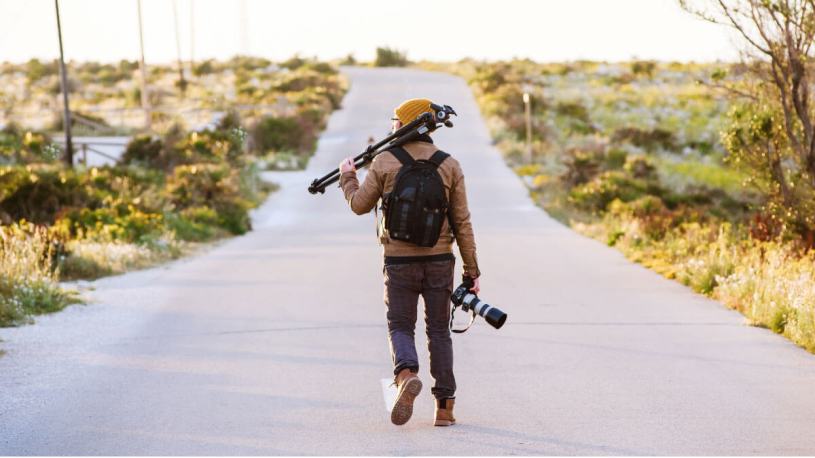
Introduction: More Than a Journey
Travel is far more than a geographical endeavor—it is an intimate exploration of the world and the self. While airlines sell tickets to distant cities and travel agencies offer curated experiences, the true value of travel lies beyond itineraries and photographs. It resides in the quiet transformations that unfold within us as we step outside the familiar, in the relationships we build with landscapes and strangers, and in the subtle, yet lasting, ways in which our perspectives shift. In its finest form, travel is an ongoing conversation between curiosity and discovery.
The Call of the Unknown: Why We Travel
At the core of human nature is a deep-seated longing to explore. Since the earliest civilizations, people have set off across seas, deserts, and mountains not only for trade or conquest but for the sheer exhilaration of the unknown. Today, in a world interconnected by technology, that impulse remains—though its expression may be different.
We travel because:
-
Curiosity compels us. We yearn to understand how others live, what they eat, how they celebrate, and what they hold sacred.
-
We seek escape. Travel offers a reprieve from routine, a chance to pause the clock and breathe differently.
-
We crave wonder. The awe of standing before the Grand Canyon or hearing the call to prayer echo across Istanbul stirs something elemental within us.
These motivations are not shallow whims, but profound responses to a world that is vast, complex, and endlessly fascinating.
Cultural Intelligence: Travel as a Gateway to Understanding
In a time when misunderstanding and division often dominate global discourse, travel becomes an instrument of peace. It builds empathy and breaks down prejudices. To walk through another culture is to momentarily adopt a different rhythm of life—and in doing so, learn to respect it.
Travel expands our cultural intelligence by:
-
Challenging assumptions. What we consider ‘normal’ is often just habitual. Exposure to other ways of living reminds us that there are countless valid approaches to life.
-
Teaching respect. When we observe traditions unlike our own—be they religious ceremonies, culinary customs, or communal norms—we learn the grace of humility.
-
Fostering connection. A shared smile, a translated phrase, or an invitation to a meal transcends cultural boundaries.
In this way, travel becomes a subtle educator—less about instruction, more about insight.
Personal Growth: Who We Become on the Road
There is something deeply revealing about being in unfamiliar territory. Without the buffers of routine and predictability, we begin to see our strengths, weaknesses, and values more clearly. Challenges become mirrors; beauty becomes balm.
Key aspects of personal development through travel:
-
Confidence and independence. Navigating a foreign transit system or bargaining in a bustling marketplace cultivates self-assurance.
-
Flexibility and resilience. Delays, language barriers, or missteps test our patience and resourcefulness.
-
Mindfulness. Immersed in a new environment, we naturally become more present, absorbing details we might otherwise overlook.
These are lessons that linger, shaping not only how we travel but how we live.
The Sensory Tapestry of the World
Travel speaks to the senses in a language all its own. It invites us to taste, hear, smell, see, and feel differently. Each destination offers its own sensory palette—its own mood, its own music.
Consider the sensory diversity of travel:
-
Taste: Savoring tagine in Morocco, sushi in Tokyo, or espresso in a Roman café offers a glimpse into a place’s essence.
-
Sound: The honking of tuk-tuks in Bangkok, the rustle of leaves in a Scandinavian forest, or flamenco guitars in Seville become sonic signatures.
-
Sight: Whether it’s the symmetry of Islamic architecture, the vivid colors of Indian saris, or the vast whiteness of an Icelandic glacier, visuals shape our emotional memory.
-
Touch: The texture of handmade fabrics, the feel of ancient stone underfoot, or the warmth of a tropical breeze—these sensations stay with us.
Travel, at its most immersive, is a full-bodied experience that imprints itself on the soul.
Responsible Exploration: Ethical Travel in the Modern Age
As more people traverse the globe, the responsibility to travel consciously grows. The beauty we admire is often delicate, and the cultures we visit deserve our respect, not our intrusion.
Principles of responsible travel include:
-
Environmental mindfulness: Choose sustainable transportation, reduce waste, and respect natural habitats.
-
Cultural sensitivity: Learn basic local phrases, understand dress codes, and avoid exploitative tourism.
-
Economic impact: Support local artisans, dine at family-owned restaurants, and avoid large corporations that bypass local economies.
-
Volunteering ethically: Ensure that volunteer opportunities genuinely benefit communities rather than satisfying tourist egos.
Ethical travel is not a burden, but a privilege—an opportunity to protect and preserve the very experiences we cherish.
Coming Home: The Echoes of a Journey
Returning from travel often brings a strange duality: the comfort of home and the ache of departure. Yet, every journey leaves behind something lasting. We carry with us stories, scents, fragments of languages, and a slightly different version of ourselves.
Travel leaves an imprint through:
-
New perspectives. Problems that once loomed large may seem smaller after seeing life in broader context.
-
Appreciation. Absence, even for a short time, often deepens our gratitude for what we have.
-
Inspiration. The colors, ideas, and encounters experienced abroad often fuel creative and professional endeavors.
In this way, travel continues long after the passport is tucked away.
Conclusion: Travel as a Life Philosophy
To travel well is to live fully. It is to embrace the unknown not with fear, but with curiosity. It is to believe that the world is both vast and intimate, unfamiliar yet welcoming. More than an occasional escape, travel is a philosophy—one that values experience over possession, dialogue over assumption, and presence over distraction.
Whether through a brief weekend away or an extended sojourn across continents, the spirit of travel teaches us to live with our eyes wide open, our hearts attuned to difference, and our minds always ready to learn. In the end, the most meaningful journeys are not marked by distance, but by depth.
 Go Vacations Travel Blog